




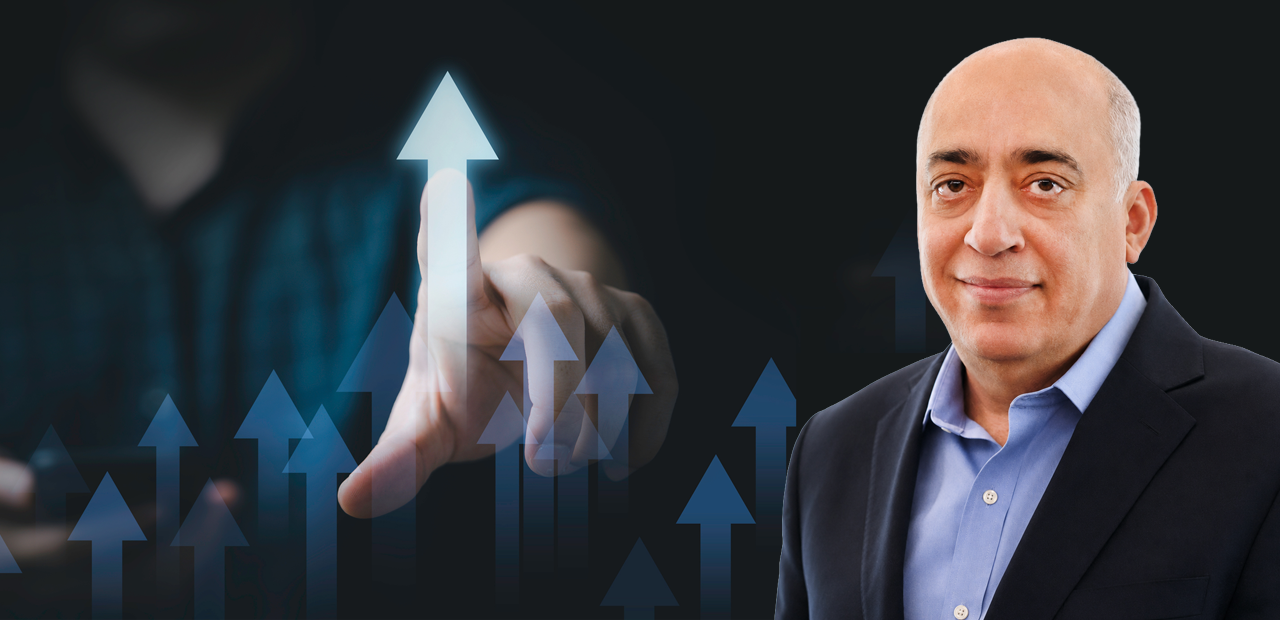
By Mahesh Rohra, Chief Strategy & Business Development Officer
The UAE is entering a new phase of economic development.
For much of the past decade, the conversation centred on growth - attracting investment, expanding industries and creating one of the world's most dynamic business environments. Those ambitions remain firmly in place, but the focus is becoming more sophisticated. Increasingly, the conversation is about productivity, resilience and long-term competitiveness.
That shift reflects the realities of today's operating environment. Geopolitical uncertainty, changing trade patterns, rapid technological change, and evolving customer expectations are reshaping markets across every sector. Yet periods of disruption have often created the greatest opportunities for organisations that are prepared to adapt.
The UAE's strength has always been its ability to convert geography into strategy, and its response has been clear. Continued investment in infrastructure, logistics, advanced manufacturing, digital capability, and clean energy is strengthening the foundations of the economy for decades to come. Initiatives including We the UAE 2031, Operation 300bn, the National Artificial Intelligence Strategy and the UAE Net Zero 2050 Strategic Initiative all point towards a more resilient, diversified and globally competitive economy.
For businesses, this changes the conversation.
The question is no longer simply, "Where will growth come from?" Increasingly, it is, "What capabilities will enable sustainable growth?"
For much of the past decade, strategy focused on expansion - entering new markets, attracting new customers, and pursuing new revenue streams. Those ambitions remain important, but the next phase requires a different mindset with more discipline. Success will increasingly be defined not simply by growth, but by productive growth.
Productive growth means stronger margins, better customer insight, faster decision-making, and more resilient operations. It means reducing unnecessary complexity, investing where organisations can create genuine competitive advantage, and building capabilities that competitors cannot easily replicate.
Products can be replicated. Technology becomes more accessible over time. Even market leadership can be temporary. What is far more enduring is an organisation's ability to adapt, develop its people, build trusted partnerships and respond confidently as markets evolve.
Artificial intelligence is perhaps the clearest example of this shift.
The conversation has moved beyond whether organisations should adopt AI to how effectively they can embed it into decision-making, operations and value creation. Across industries, AI is already transforming customer engagement, finance, procurement, logistics, sales, and analytics.
The technology itself will not create competitive advantage. That advantage will come from organisations that combine AI with strong data foundations, clear governance, and people who know how to apply it effectively. Perhaps most significantly, AI is beginning to change the economics of work. Scale will no longer depend solely on headcount. Increasingly, it will depend on intelligence, speed, data, and the ability to combine human judgement with digital capability.Leaders who use AI well will outperform those who do not.
The same principle applies more broadly. Recent years have shown that resilience is not built through efficiency alone. Businesses are strengthening supply chains, investing in digital capability, and building greater operational agility, while the UAE continues to reinforce its position as one of the world's leading trading and logistics hubs through sustained investment in ports, logistics corridors, and transformative projects such as Etihad Rail. Infrastructure investment is more than an economic driver; it is a confidence signal that strengthens connectivity, supports trade, creates the conditions for long-term competitiveness and hedges the risks seen in the supply chain challenges recently.
Perhaps the most significant shift, however, is happening within organisations themselves. Industry boundaries are becoming increasingly blurred. Automotive businesses are becoming mobility and software businesses. Logistics companies are becoming data businesses. Manufacturers are integrating digital platforms, automation and artificial intelligence into every aspect of their operations. Tomorrow's competitors may emerge from sectors that barely intersect today.
In today's economy, competitive advantage is no longer accumulated; it is continually renewed.
“In today's economy, competitive advantage is no longer accumulated; it is continually renewed.”
For organisations operating in the UAE, this presents a significant opportunity. The country's long-term direction is clear. The challenge for business is ensuring organisational capability keeps pace with national ambition.
At AWR Group, this perspective continues to shape how we think about the future. Rather than attempting to predict every market movement, our focus is on building the capabilities that allow us to respond with confidence, embrace change, and create long-term value across our businesses.
The businesses that define the next decade will not simply survive disruption; they will use disruption to become stronger. As we look ahead, our opportunity is clear: to build the capabilities that make us more agile, more intelligent, more resilient and better prepared for whatever comes next.
The road ahead may remain uncertain — but our direction must be decisive.